
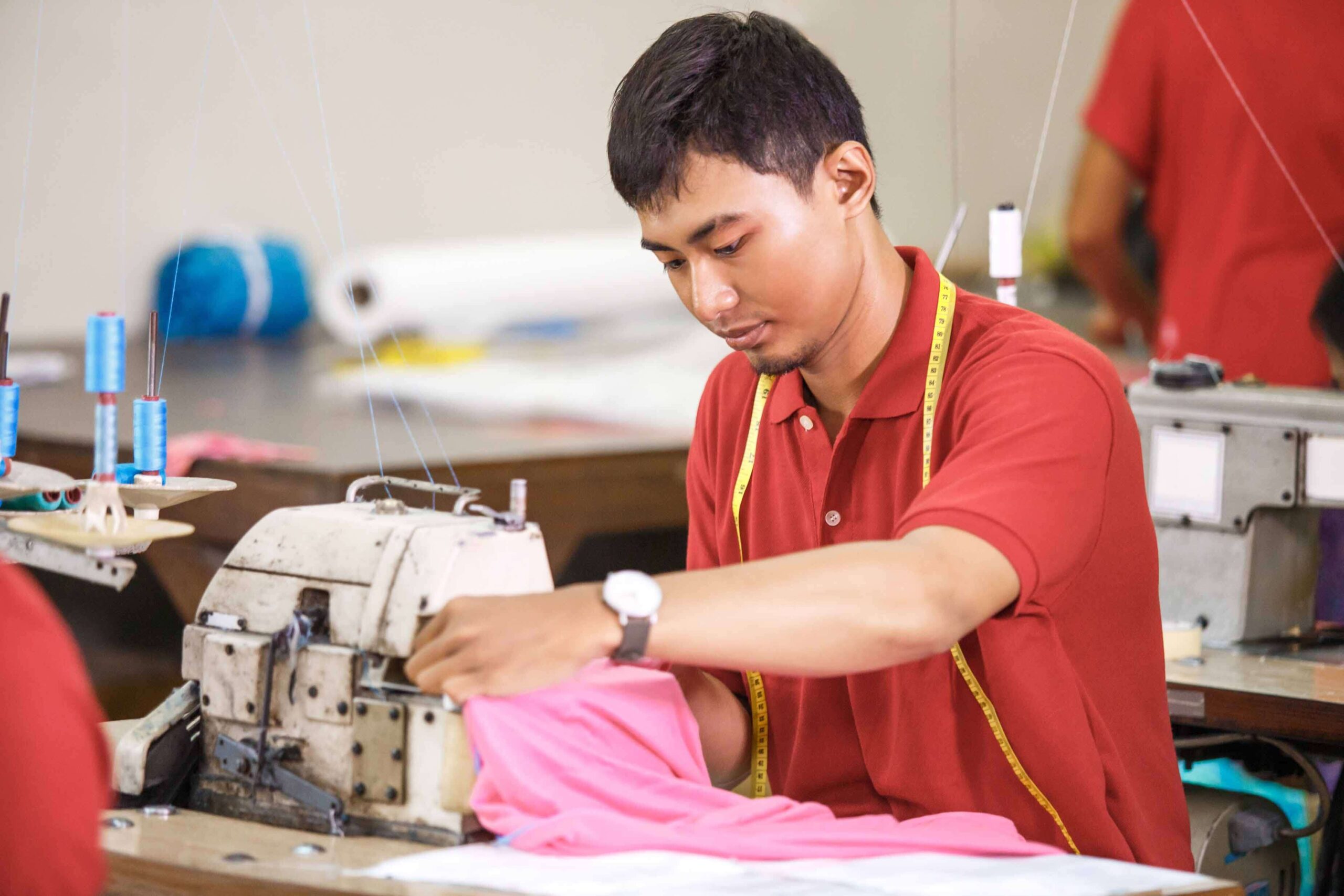
In Cambodia’s busy textile factories, English is quietly making a difference. For many workers, it’s become the key to better jobs, more responsibility – and brighter futures.
In the garment and textile sector, where Cambodia is a regional leader, production is fast-paced, and international clients are the norm. Whether it’s following a technical specification, communicating with a foreign supervisor, or preparing reports, workers with even basic English skills often find themselves standing out.
We spoke to a few textile workers who shared how learning English helped them step up in their careers.
Better understanding = fewer mistakes
When working with export orders, English is everywhere – from size charts and order sheets to machine settings and safety signs.
“Before, I had to ask my team leader to translate everything,” says Chenda, a sewing operator in Kampong Speu. “But now I understand more of the English on the forms. It’s easier to work fast and avoid mistakes.”
By understanding instructions clearly, workers can improve efficiency and reduce errors – two things that factory managers pay close attention to.
Confidence to communicate
In many factories, supervisors or quality inspectors come from abroad – often speaking only English. Workers who can greet them, ask questions, or give updates in English are more likely to be noticed.
“When our buyer from the UK visited, I said, ‘Good morning, welcome to our factory,’” recalls Vannak, a line leader in a Phnom Penh garment plant. “Later, my manager asked me to assist with the quality team.”
Even simple phrases make a big impact. English doesn’t need to be perfect – showing effort and a positive attitude counts for a lot.
Moving up the ladder
Promotion opportunities often come to those who can take on extra responsibilities – and English helps.
“I started in finishing,” says Sreyneang, now a quality control assistant in a textile factory in Takeo. “After I joined a weekend English class, I was offered a new position with better pay.”
Many textile factories now value workers who can take part in audits, explain processes to visitors, or help train others. English is often part of those tasks.
Conclusion
In Cambodia’s growing textile industry, English is more than a skill – it’s a signal that you’re ready to grow. Whether you’re checking an order, leading a team, or welcoming an international visitor, English helps you communicate clearly, work smarter, and reach the next level.
For textile workers across Cambodia, English is helping turn hard work into real progress – one phrase at a time.